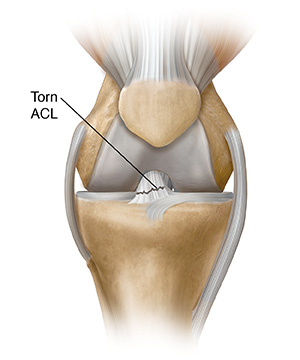
The ACL (anterior cruciate ligament) is a band of tough, fibrous tissue that stabilizes the knee. Injuries to the ACL are very common, especially among athletes. Treatment for your injury may or may not include surgery. Treatment depends on the severity of the injury and how active you hope to be in the future. Treatment also depends on the type of activities you wish to participate in. Your healthcare provider can discuss your treatment options with you.
Reduce pain and swelling
Whether or not you have surgery, you can help reduce pain and swelling with rest, ice, compression, and elevation. Rest with your knee raised (elevated) above heart level. Put ice on your knee
Use crutches
Crutches can help you get around during your recovery. They reduce stress on your knee. Follow your healthcare provider’s advice about the use of crutches and how much weight to put on your injured leg. Use crutches or a brace for as long as advised.
If you need surgery
For severe ACL injuries, you may need a procedure called ACL reconstruction. This is surgery that uses a graft (new tissue) to replace a torn ligament. If surgery is needed, your healthcare provider can give you more information about it.
Rehabilitation
Whether or not you have surgery, rehabilitation exercises are important. Exercise is needed to strengthen the muscles that support your knee. It will also help you regain flexibility, reduce pain, and prevent other knee problems in the future. Your healthcare provider can show you the best exercises for your knee. They will also tell you how long and how often to exercise.
When to call your healthcare provider
Call your healthcare provider right away if you have any of these:
-
Severe or increasing pain in your knee or leg
-
Swelling in your entire leg
-
Redness or warmth in your leg
-
Heat, swelling, or soreness in your calf
-
Fever that lasts more than
24 hours


