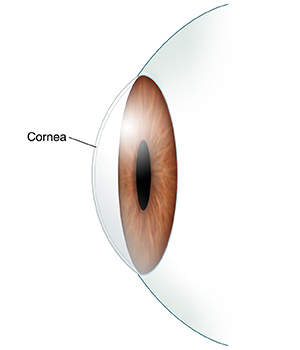
Ultraviolet keratitis, also called snow blindness, is when exposure to too much UV (ultraviolet) light hurts your cornea. This causes pain and affects your vision. The cornea is the clear cover on the front part of your eye. It helps focus light. It protects your eye from dust and germs. The cornea also filters UV rays before they enter your eye.
Risk factors
UV damage to your cornea can be caused by:
-
Reflected sunlight from sand, ice, snow, or water
-
Sunlamps used in tanning beds
-
Halogen lamps or welding torches
-
Lightning
-
Exposure to direct sunlight for too long
When to go to the emergency room (ER)
Symptoms of ultraviolet keratitis appear 6 to 12 hours after damage happens. Call your healthcare provider or seek urgent medical care right away if you have any symptoms after light exposure. Symptoms include:
-
Eye redness and tearing
-
Eye pain, which may be severe and get worse when you move your eyes
-
Flashing spots or flashes of light
-
Changes in your vision
-
Feeling like you have something in your eye
-
Sensitivity to light
-
Seeing bright circles (halos) around a light source
-
Eyelid swelling or twitching
What to expect in the ER
A healthcare provider will ask about your exposure to UV light. They will check your eyes carefully using a microscope with a bright light (a slit lamp). A special dye called fluorescein may be placed on your cornea. This helps to show damage more clearly.
Depending on your symptoms, you may need one or more of the following treatments:
-
Medicines to help reduce pain
-
An antibiotic ointment to prevent an eye infection
-
An eye patch to help with healing and ease mild pain
Follow-up
Call your healthcare provider if new eye symptoms develop or your pain or vision problems last more than 48 hours.
Wear sunglasses that block 100% of both UVA and UVB radiation whenever you spend time outdoors. Gray, green, and brown lenses provide the most protection.
Important
Never look directly at a solar eclipse. This can cause serious damage to your eyes.