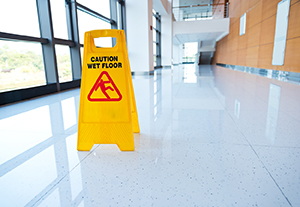
Slips occur when there's too little friction between your feet and the ground. Common causes of slips are:
-
wet surfaces
-
oily surfaces.
-
weather hazards like ice, snow, rain.
-
loose mats, rugs, soil, or ground.
-
Flooring or other walking surfaces that do not have the same degree of traction in all areas.
Slips often happen when you're distracted or in a hurry. But they can be prevented.
Watch for hazards
-
Constantly wet surfaces. Some jobs have work surfaces that are always wet or greasy. You could slip on a wet or greasy surface if you turn sharp corners quickly or don't pay attention to where you're going. Walking too quickly or taking long steps may also cause you to slip. Another common problem is wearing slippery shoes that don't give you much traction.
-
Occasional spills. Even a minor coffee or water spill can be dangerous. You could slip if you walk over a spill that someone didn't clean up or report. You could also slip if you walk with your hands in your pockets instead of keeping them free for balance. And slipping often happens when you're in a hurry.
Walk on wet surfaces safely
If you must walk on wet surfaces, take care to prevent injury:
-
Make wide turns at corners.
-
Pay attention to the surface you're on.
-
Walk slowly and take short steps.
-
Wear slip-resistant shoes.
-
Keep your hands free for balance.
Clean spills right away
To keep walkways clear and safe, keep these goals in mind:
-
Clean or report spills right away.
-
Mark large spills with a sign, paper towels, or a waste basket.