Many types of cancer are linked to lifestyle. Healthy lifestyle choices can help lower your risk for cancer and many other diseases. They can also improve your overall health. There is no way to guarantee that you won't have cancer. But there are many ways to reduce your risk of cancer.
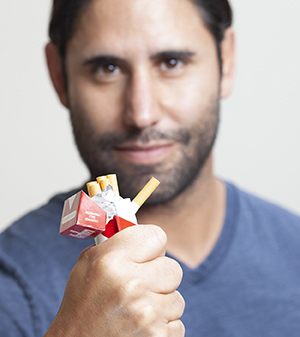
Stop smoking
-
Talk with your healthcare provider. They can help you quit. Ask about nicotine patches. Ask about prescription medicines.
-
Get help from ex-smokers.
-
Create a plan for quitting.
-
Pick a quit date and stick to it.
-
Get help and more information from smokefree.gov.
Stay at a healthy weight
-
Ask your healthcare provider for help if you need to lose weight. Losing even a little weight is good for you.
-
Once you're at a healthy weight, take steps to maintain it.
Keep active
-
Do 20 to 40 minutes of physical activity a day.
-
Take walks, garden, or do other activities you enjoy each day.
-
Do errands on foot or bike, not by car.
-
Join a walking or biking club.
-
Limit the time you spend sitting to do things. This includes watching TV, playing video games, or using a computer.
Eat a healthy diet
-
Eat less red meat and processed meat.
-
Eat at least 2.5 cups of fruits and vegetables daily, especially leafy greens.
-
Eat more whole grains instead of refined grain foods.
-
It's best to not drink alcohol. Or limit alcohol to 2 drinks a day if you're a man and 1 drink a day if you're a woman.
-
Limit high-calorie foods and drinks.
-
Read food labels to be more aware of calories and portion sizes.
Protect yourself from hazards
-
When outside during the day, use sunscreen that has a broad-spectrum SPF of 30 or higher.
-
When out in sunlight, wear a hat and sunglasses.
-
Seek shade in the middle of the day when the sun is strongest.
-
Be aware of all hazardous products at work or in your home.
-
When working with hazardous products, wear protective clothing
Talk with your healthcare provider about cancer screenings
Screening can help prevent some types of cancer. Regular screening can find and remove abnormal areas before they turn into cancer. For other types of cancer, screening may help find cancer early, when it's small. This is when treatment is most likely to work better. Here are ways you can screen for some types of cancer:
-
Breast cancer. Breast self-awareness, mammograms
-
Skin cancer. Self-exam, exam by a healthcare provider, biopsy of changes that look like cancer
-
Cervical cancer. Pap test and HPV (human papillomavirus) test
-
Colorectal cancer. Test for blood or DNA in stool, colonoscopy or other exams to look inside the colon and rectum
-
Prostate cancer. PSA blood test, digital rectal exam
-
Testicular cancer. Self-exam, exam by a healthcare provider
-
Lung cancer. Annual low-dose CT (LDCT) scan (for current or past smokers)
Talk with your healthcare provider about your family history and your cancer risk. Together you can decide on the cancer screening plan that's best for you.
Featured in