You and your healthcare provider can talk about other ways to manage your incontinence. These may be used with other treatments, or used alone. Your provider may teach you ways to train your bladder. Keeping a bladder diary can help. Other helpful changes include cutting back on drinks that increase the urge to urinate, such as those with alcohol or caffeine. Limiting drinks at night may also help.
Timed voiding
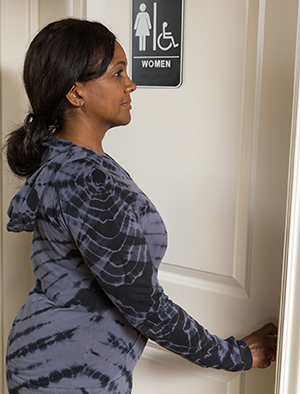
Timed voiding means urinating on a set schedule. This empties the bladder and helps prevent accidents. Visit the bathroom at the scheduled time. Don’t wait until you have the urge to urinate. Your healthcare provider can suggest how often you should urinate.
Bladder retraining
If you have urge incontinence, you may be used to going to the bathroom very often. To help retrain your bladder, your healthcare provider may suggest using Kegel exercises. Each time you feel the urge to go, try to stop the feeling by contracting your pelvic floor muscles. To learn which muscles to contract, you can try to stop the stream of urine by contracting the pelvic floor muscles. These exercises help strengthen and control your bladder muscles. But Kegel exercises should be done when you don't have to urinate. It's not advised to do them each time you urinate. Your provider can give you a goal to work up to. This treatment should never be used in children.
Self-catheterization
Catheterization uses a thin tube (catheter) to drain urine from the bladder. The catheter is put into the bladder through the urethra. You may be asked to do self-catheterization. Regularly draining your bladder of urine can help control overflow incontinence. It doesn't hurt and is easy to learn. If this treatment will help you, your healthcare provider will teach you how to do it.