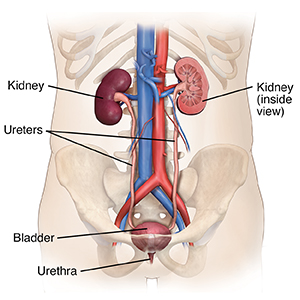
The kidneys are 2 bean-shaped organs. Each is about the size of a fist. They sit just below the rib cage, on each side of the backbone. Healthy kidneys clean the blood. Two normal kidneys can filter wastes and excess fluid from hundreds of pints of blood each day. This helps maintain the chemical balance the body needs to stay healthy and alive. The kidneys also carry out many other vital functions. This includes controlling blood pressure, maintaining healthy bones, and signaling the bone marrow to make red blood cells.
When the kidneys fail
If both kidneys fail, it's called chronic kidney disease. Waste made during normal cell functions builds up in the blood (uremia). Over time, this can threaten your health. Some people are born with 1 kidney, or donate a kidney during their lifetime. People can function normally with just 1 healthy kidney, or even a part of 1 kidney. Some conditions that cause kidney damage include:
-
Diabetes
-
High blood pressure
-
Smoking
-
Injury
-
Immune system diseases
-
Hereditary conditions
-
Certain medicines
Removing wastes
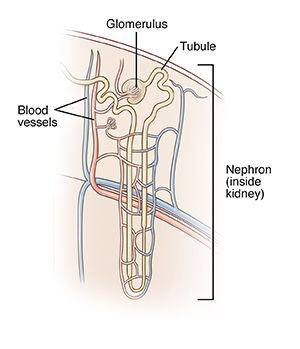
The kidneys are part of a system that removes wastes from your body. For this system to work, the kidneys and urinary tract must do their jobs. The kidney isn't 1 large filter. Each kidney is made up of about 1 million filtering units called nephrons. Each nephron filters a small amount of blood. Each nephron has a filter called the glomerulus. The nephron also has a tubule. The nephrons work through a 2-step process: The glomerulus filters your blood, and the tubule returns needed substances to your blood and removes wastes.
Vessels carry blood
Tiny blood vessels inside the kidneys carry blood to the filtering units (nephrons). These vessels also shrink or expand to control the pressure inside the kidneys. This keeps a constant supply of blood to the nephrons.
Filters clean blood
Blood is cleaned as it passes through the nephrons. Wastes and extra fluid are taken and removed from the body in urine. The correct amounts of clean fluid and vital chemicals (salts and enzymes) are returned to the blood.
Urinary tract removes wastes
Two tubes, called the ureters, connect the kidneys with the bladder (where urine collects). When the bladder is full, the urine is passed out of the body through a tube (urethra) when peeing. The kidneys, ureters, and bladder make up the urinary tract.
Online Medical Reviewer: Marianne Fraser MSN RN
Online Medical Reviewer: Raymond Kent Turley BSN MSN RN
Online Medical Reviewer: Walead Latif MD
Date Last Reviewed: 03/01/2024
© 2000-2026 The StayWell Company, LLC. All rights reserved. This information is not intended as a substitute for professional medical care. Always follow your healthcare professional's instructions.