Dismiss Modal

Treatment

Poisonous Snakebite Without Venom Injection (Dry Bite)

Choose a preferred language

You have been treated for a bite by a venomous snake. Fortunately, the amount of venom injected was so small that you don't need more treatment. This is called a dry bite. In the U.S., many pit viper and coral snake bites are dry bites. It's very unlikely that any delayed signs of snake venom poisoning will appear. But watch for the signs listed below to be safe. You may get a tetanus shot depending on the injury and what vaccines you have had. You will likely not need antibiotics. This depends on where the bite is, how severe it is, what type of snake bit you, and other factors.
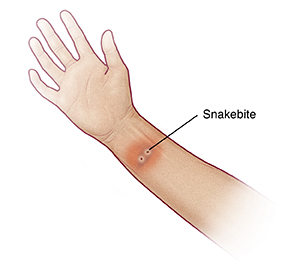
Arm with hand palm side up showing snakebite on wrist.


Home care

Follow these home care guidelines:

  • Keep the bite area clean and dry, and watch for the warning signs listed below.

  • You don't need any special treatment. Any local pain or soreness you have should go away over the next 24 hours.


Follow-up care

Follow up with your healthcare provider, or as advised.


When to get medical advice

Call your healthcare provider right away if any of these occur:

  • Swelling of the bite area that gets worse

  • Pain in the bitten arm or leg that gets worse

  • Redness around the bite

  • Fluid drains from the bite

  • Fever of 100.4ºF (38ºC) or higher, or as directed by your healthcare provider

  • Bruising or abnormal bleeding

© 2000-2025 The StayWell Company, LLC. All rights reserved. This information is not intended as a substitute for professional medical care. Always follow your healthcare professional's instructions.
Related Articles
Read article
Urgent Care
Choking First Aid (1 Year and Older)

Detailed information on choking, choking prevention, and doing abdominal thrusts to treat someone who is choking.

Read article
Urgent Care
First Aid: Chemical Exposure

Some chemicals cause burns. Others may be absorbed through skin or lungs, causing hidden damage.

Read article
Urgent Care
Burn Emergencies

Electricity, chemicals, steam, very hot water, and fire can all cause serious burns. The care you receive for burns will depend on the type and severity of your injury. Many burns can be treated in an outpatient setting. If a burn needs inpatient treatment, it should be performed in a burn center. Very severe burns need treatment in a burn center.

Read article
Urgent Care
First Aid: Bleeding

Call 911 if you can't stop the bleeding or the victim shows signs of shock.


