The base of the thumb where it meets the hand is called the carpometacarpal (CMC) joint. This joint lets the thumb move freely in many directions. It provides strength so the hand can grasp and grip.
A smooth tissue called cartilage lines and cushions the bones of the CMC joint. Using the thumb puts stress on the joint. Over time, this can lead to the breakdown of the cartilage in the joint. This is known as osteoarthritis. With this condition, bones of the joint may rub together. They may become irritated and rough. This keeps the joint from moving smoothly and can lead to pain.
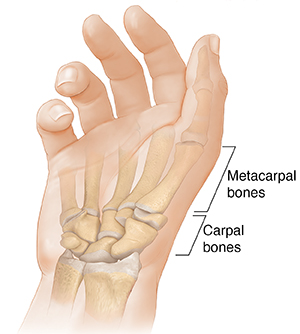
How to say it
KAR-po-met-uh-KAR-puhl
What causes CMC joint osteoarthritis?
This type of osteoarthritis is mainly caused by years of using the hand and thumb. The condition may be more likely if you:
-
Regularly do things that put great stress on the thumb joint.
-
Have had previous thumb injuries.
-
Have weak or loose tissue in the thumb.
Symptoms of CMC joint osteoarthritis
Symptoms commonly include:
-
Thumb pain that may get worse with pinching or gripping.
-
Thumb weakness.
-
Sounds of grinding or popping in the thumb joint.
-
Swelling or stiffness at the base of the thumb.
Treatment for CMC joint osteoarthritis
Osteoarthritis is a long-term (chronic) condition. Treatment focuses on managing symptoms. It may include:
-
Taking prescription or over-the-counter medicines to help reduce pain and swelling.
-
Using a brace to rest and support the thumb joint.
-
Using hot or cold therapy to help relieve pain.
-
Learning and practicing ways to reduce stress on the thumb joint.
-
Using devices that help protect the joint, such as jar openers, pen grips, and spring-action scissors.
-
Doing physical therapy and exercises to help improve the flexibility and strength of the hand and thumb.
-
Getting shots of medicine into the joint to help relieve symptoms for a time.
If these treatments don’t do enough to relieve severe pain, you may need surgery. There are several types of surgery. Your doctor will talk with you about choices if needed. In general, the goal is to ease pain and help you to be able to use the hand.
When to contact your doctor
Contact your doctor or get medical care right away if you have:
-
A fever of 100.4°F (38°C) or higher, or as advised by your doctor.
-
Symptoms that don’t get better or that get worse.
-
New symptoms.
Author: Michels, Karen
Online Medical Reviewer: Rahul Banerjee MD
Online Medical Reviewer: Raymond Turley Jr PA-C
Date Last Reviewed: 05/01/2025
© 2000-2026 The StayWell Company, LLC. All rights reserved. This information is not intended as a substitute for professional medical care. Always follow your healthcare professional's instructions.