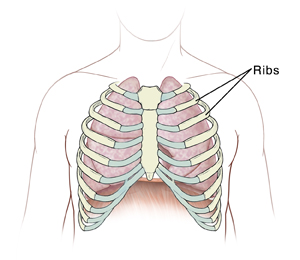
A rib contusion is a bruise to one or more rib bones. It may cause pain, tenderness, swelling, and a purplish color to the skin. There may be a sharp pain with each breath. A rib contusion takes anywhere from a few days to a few weeks to heal. A minor rib fracture or break may cause the same symptoms as a rib contusion. The small crack may not be seen on a regular chest X-ray. Treatment for both problems is basically the same.
Home care
-
You may use over-the-counter pain medicine, such as ibuprofen to control pain, unless another pain medicine was prescribed. Talk with your health care provider before using these medicines if you have chronic liver or kidney disease, ever had a stomach ulcer or digestive bleeding, or take blood thinners.
-
Rest. Don't lift anything heavy or do any activity that causes pain.
-
Apply an ice pack over the injured area for 15 to 20 minutes every 1 to 2 hours. Do this for the first 24 to 48 hours. To make an ice pack, put ice cubes in a plastic bag that seals at the top. Wrap the bag in a clean, thin towel or cloth. Never put ice or an ice pack directly on the skin. Continue with ice packs as needed for the relief of pain and swelling.
-
The first 3 to 4 weeks of healing will be the most painful. If your pain is not under control with the treatment given, call your provider. Sometimes a stronger pain medicine may be needed. A nerve block can be done in case of severe pain. It will numb the nerve between the ribs.
Follow-up care
Follow up with your health care provider, or as advised.
If X-rays were taken, you will be told of any new findings that may affect your care.
Call 911
Call
-
Dizziness, weakness or fainting.
-
Shortness of breath.
-
Chest pain.
-
Pain that is new or gets worse.
When to get medical advice
Contact your health care provider right away if you have:
-
A fever of 100.4°F (38°C) or higher, or as advised by your provider.
-
Chills.
-
Stomach pain or vomiting.
Online Medical Reviewer: Joseph, Thomas, MD
Online Medical Reviewer: Moloney Johns, Amanda, PA-C, MPAS, BBA
Date Last Reviewed: 02/01/2025
© 2000-2026 The StayWell Company, LLC. All rights reserved. This information is not intended as a substitute for professional medical care. Always follow your healthcare professional's instructions.

