A hard blow can break a bone in your toe or finger. Broken bones are also known as fractures. Even minor fractures need medical care. Without treatment, they may heal crooked, remain stiff, or develop other problems.
When to go to the emergency room (ER)
You may not always know when you have a fractured toe or finger. Apply ice to the injury right away. Then, get medical care if:
-
Your finger or toe is swollen or very painful.
-
You can't move your finger or toe normally.
-
Your injured toe or finger is pale or blue.
-
Your injured toe or finger is deformed.
-
You are bleeding.
-
A bone sticks out (protrudes) through your skin.
What to expect in the ER
A healthcare provider will ask about your injury and examine your toe or finger. You may have X-rays. Treatment will depend on the type of fracture you have.
Toe fracture
Your healthcare provider may straighten a broken toe. You'll be given local anesthesia so you won't feel any discomfort during this procedure. Your injured toe may then be splinted by being taped to a toe next to it, or placed on a pad that's taped to your foot. Your healthcare provider may also ask you to apply ice and keep your foot raised.
Finger fracture
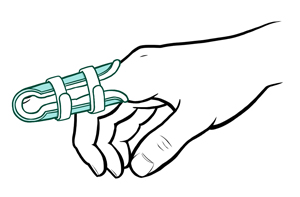
Your healthcare provider may straighten a broken finger. A broken finger is likely to be placed in a metal splint. This helps straighten and protect the finger while it heals. Your healthcare provider may give you exercises to do as your injury heals, to prevent stiffness in your finger.
Online Medical Reviewer: Raymond Turley Jr PA-C
Online Medical Reviewer: Rita Sather RN
Online Medical Reviewer: Thomas N Joseph MD
Date Last Reviewed: 10/01/2024
© 2000-2026 The StayWell Company, LLC. All rights reserved. This information is not intended as a substitute for professional medical care. Always follow your healthcare professional's instructions.