Turf toe is a sprain of the largest joint of the big toe. It happens when the toe bends up too far. This can happen when pushing off the foot to run.
Turf toe became more common when football players began playing on artificial turf instead of grass. Artificial turf is harder than grass. It’s a common injury for athletes who play football or other sports on artificial turf. But it can happen in a wide variety of sports and activities.
Types of treatment
Treatment depends on how severe the injury is. A mild injury can be treated with:
-
Resting from the activity that caused the injury.
-
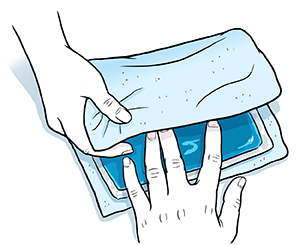
Using cold packs for 20 minutes at a time, several times a day.
-
Using an elastic compression band to help prevent more swelling.
-
Raising your leg when sitting, to prevent swelling.
-
Taking over-the-counter pain medicine, such as acetaminophen or ibuprofen.
A more severe injury may be treated with:
-
A walking boot or hard shoe. This is used to help keep the toe joint from moving or bending. It’s worn for a week or so for a moderate injury. It’s worn for a longer time with a more severe injury.
-
A cast. This helps to keep the foot from moving or bending. It’s usually worn for at least several weeks.
-
Surgery. You may need surgery if you have a severe tear of tissues in the joint, the joint is unstable, or the injury doesn’t heal well.
-
Physical therapy. These are exercises that can help stretch and strengthen your big toe as it heals.
Possible complications of turf toe
Turf toe may cause long-term stiffness and pain in your joint. Physical therapy exercises may help prevent stiffness and pain.
Getting back to your sport
If you are an athlete, talk with your health care provider and trainers to see when you might be ready to return to your sport. It’s important not to return to your activity too soon because this increases your chances of injuring your toe again. People with mild injuries may be able to play soon after the injury. If you have a more severe injury, you may need to be out of play from weeks to months. Full recovery may take up to a year.
Your provider or trainer can suggest appropriate shoes and shoe inserts. These will help to give your foot more support. You may also be told to tape your big toe to your other toes (called buddy taping). This can give extra support.
When to contact your doctor
Contact your health care provider if you have any of the following:
-
Symptoms that don’t get better or that get worse
-
Fever of 100.4° F (38° C) or higher, or as directed by your provider
-
Chills
-
Numbness in the toe
-
Toe that feels cold
-
Toe that looks pale