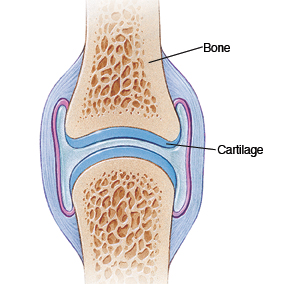
Arthralgia is the term for pain in or around the joint. It is a symptom, not a disease. This pain may affect one or more joints. In some cases, the pain moves from joint to joint.
There are many causes for joint pain. They include:
-
Injury.
-
Wearing out the joint surface (osteoarthritis).
-
Inflammation of the joint because of crystals in the joint fluid (gout).
-
Infection inside the joint.
-
Inflammation of the fluid-filled sacs around the joint (bursitis).
-
Autoimmune disorders, such as rheumatoid arthritis or lupus.
-
Inflammation of chords that attach muscle to bone (tendonitis).
Home care
-
Rest the affected joints until your symptoms improve.
-
Eat a healthy diet, exercise as advised by your health care provider, and stay at a healthy weight.
-
You may be prescribed pain medicine. If not, you may use acetaminophen or ibuprofen to control pain and inflammation. Check with your provider before using OTC pain medicines, especially if you have any kidney or liver problems, stomach ulcers, or are on blood thinners.
-
For non-arthritis joint pain, rest can help. So can warm baths, massage, and stretching exercises.
Follow-up care
Follow up with your provider as advised.
When to contact your doctor
Contact your provider right away if:
-
The pain, swelling, or redness of the joint increases.
-
The pain gets worse or comes back after some improvement.
-
The pain moves to other joints.
-
The affected joint can't bear your weight.
-
You can't move the affected joint.
-
The joint looks deformed.
-
A new rash appears.
-
You have a fever of 100.4ºF (38ºC) or higher, or as advised by your provider.
-
New symptoms appear.