Myomectomy is a surgery to remove uterine fibroids. This surgery may help you keep your uterus. And it may help you keep the choice to get pregnant.
Before your surgery
You may be asked to:
-
Have tests that doctor has ordered.
-
Not eat or drink for a certain amount of time before surgery. Your care team will tell you how long.
-
Take medicines as prescribed to shrink fibroids.
-
Stop taking aspirin or ibuprofen 1 week before surgery. Tell your doctor what other medicines you take. Ask if you should stop taking any of them.
-
Arrange for a friend or family member to drive you home after surgery.
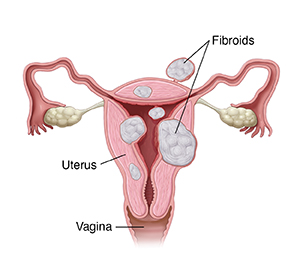
Types of myomectomy procedures
Abdominal
Your surgeon makes incisions (cuts) in your belly and uterus. They then remove the fibroids. Then the uterus is repaired. The incisions are closed.
Laparoscopic
Your surgeon puts a laparoscope and other surgery tools through small incisions in your belly. They make one or more incisions in your uterus to remove the fibroids. Then the uterus is repaired. The incisions are closed.
Hysteroscopic
A hysteroscope is put into your vagina. A tool is then used to remove the fibroids from your uterus.
When to contact your doctor
Contact your doctor right away if you have:
-
Pain that is severe or that gets worse.
-
Fever or chills.
-
Nausea or vomiting.
-
Redness or swelling around your incision.
-
Vaginal bleeding that is heavy or that doesn’t stop.
Featured in