Polycystic ovary syndrome (PCOS) causes harmless, small cysts in the ovaries and other symptoms. PCOS is caused by certain hormones being out of balance. The word syndrome means a group of symptoms. Women with PCOS may have no periods, irregular periods, or very long or heavy periods.
Your ovaries
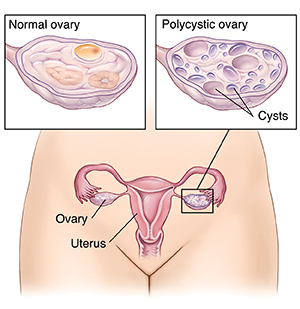
Women store their eggs in their ovaries. Each egg is in a capsule called a follicle. Normally during the reproductive years, one follicle grows to make a mature egg each month. This egg is released during ovulation and the follicle dissolves.
Hormones out of balance
With PCOS, the hormones that control ovulation are out of balance. These include estrogen, progesterone, and androgen. As a result, ovulation may not occur. Instead, the follicle stays enlarged. This is a fluid-filled sac called a cyst. Over time, the ovaries fill with many small cysts. This is why they are called poly or many cystic ovaries. In some women, the ovaries also make too much androgen.
Symptoms of PCOS
Women with PCOS may also have one or more of these symptoms:
-
Acne
-
Hair growth on the face and other parts of the body
-
Patches of thick, velvety, dark skin (acanthosis nigricans), often on the neck or groin area
-
Trouble getting pregnant (fertility problems)
-
Weight gain, often around the waist
Women with PCOS are also at greater risk of having cancer of the uterine lining, diabetes, and heart disease.
Featured in