Everyone feels sad from time to time. But depression is much more than just feeling down. It's a real illness just like diabetes or heart disease. You can't just "snap out of it." Experts think that more than one thing causes depression. These include genes, biology, environment, and mental health. And chemical changes in the brain may add to the symptoms.
Brain chemicals and depression
The brain is a complex organ. It controls your whole body. This includes your emotions, too. It does this by sending messages from one nerve cell to another. Messages also travel inside the brain. They travel with help from chemicals. These are called neurotransmitters. No one knows exactly what happens in the brain to cause depression. But experts know that neurotransmitters are involved.
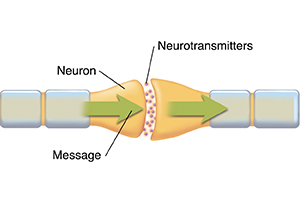
Changes in the brain
Two neurotransmitters are mainly involved in depression. These are norepinephrine and serotonin. Medicines and talk therapy are the main treatments for depression. Both change the levels of these chemicals. In many cases, they ease symptoms of depression.
Online Medical Reviewer: Daphne Pierce-Smith RN MSN
Online Medical Reviewer: Marianne Fraser MSN RN
Online Medical Reviewer: Sravani Chintapalli Researcher
Date Last Reviewed: 06/01/2025
© 2000-2026 The StayWell Company, LLC. All rights reserved. This information is not intended as a substitute for professional medical care. Always follow your healthcare professional's instructions.

