Management

Priming Your Metered-Dose Inhaler

Choose a preferred language


Step-by-Step

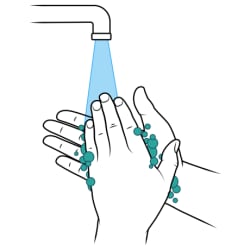
  1. Hands scrubbing with soap under faucet with running water.

    Wash your hands.

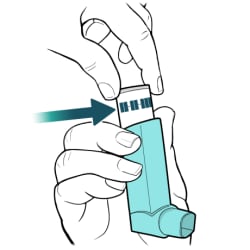
  2. Hands holding inhaler upright, with canister visible at top of inhaler and arrow pointing to date on canister.

    Check the expiration date.

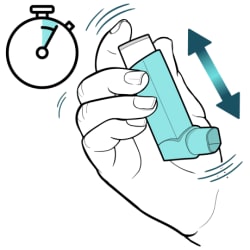
  3. Hand holding inhaler upright, shaking inhaler up and down, with clock showing time passing.

    Shake your inhaler for 5 seconds.

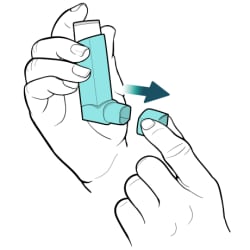
  4. Hand holding inhaler upright, with other hand removing cap from mouthpiece.

    Take the cap off.

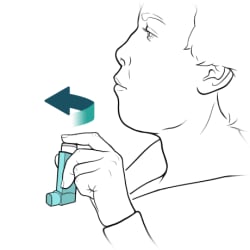
  5. Person holding inhaler upright with one hand, pointing inhaler away from face.

    Point your inhaler away from you.

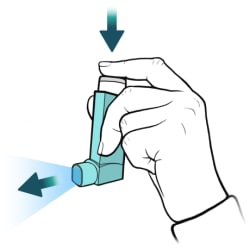
  6. Hand holding inhaler upright and pointed away, with finger pressing on top of canister to spray medicine.

    Press down on the top three times.

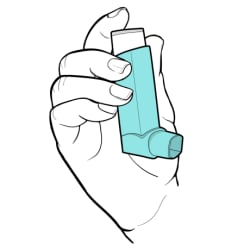
  7. Hand holding inhaler upright, no cap on mouthpiece.

    Now your inhaler is ready to use.
© 2000-2026 The StayWell Company, LLC. All rights reserved. This information is not intended as a substitute for professional medical care. Always follow your healthcare professional's instructions.


Related Articles
Read article
Lung Health
Cleaning Your Metered-Dose Inhaler

Here are images showing you how to clean your metered-dose inhaler.

Read article
Lung Health
Breathing Methods: Diaphragmatic Breathing

Diaphragmatic breathing or belly breathing involves breathing with your diaphragm, a large muscle located below your lungs. Using your diaphragm makes breathing easier. Try this belly breathing exercise.

Read article
Lung Health
Chronic Lung Disease: Helping with Treatment, For Caregivers

For someone with chronic lung disease, visits with the healthcare provider are key for good health. Encourage your loved one to take the lead in their care. Then give them support as needed. Read on to learn how you can help.

Read article
Lung Health
Chronic Lung Disease: Controlling Stress

Stress and anxiety can make breathing harder. When it's hard to breathe, it's natural to get anxious and start to panic. This makes you even more short of breath. This sequence is known as the dyspnea cycle, and it's common among people with COPD. The good news is, you have the power to break the cycle.