Dismiss Modal

Types

Problemas de las válvulas del corazón: estenosis de la válvula mitral

Choose a preferred language

La estenosis mitral ocurre cuando la válvula mitral se endurece y no abre del todo, por lo cual la sangre tiene que circular a través de una abertura más pequeña. Si la estenosis es grave, se puede acumular líquido en los pulmones, lo que provoca tos y trastornos respiratorios. Los problemas de la válvula mitral también pueden producir latidos más rápidos o irregulares (palpitaciones). Con el tiempo, la estenosis mitral puede agravarse gradualmente.
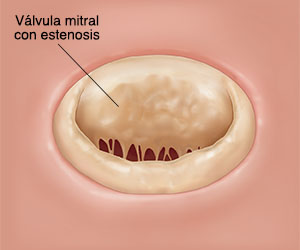
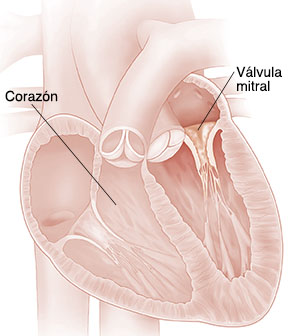
Vista superior de una válvula mitral abierta con estenosis.Corte transversal del corazón que muestra una válvula mitral con estenosis.


Posibles causas

La mayoría de los casos de estenosis mitral se deben a un episodio de fiebre reumática, que puede provocar una inflamación que afecta las válvulas del corazón. Si bien el embarazo no produce estenosis mitral, es durante el embarazo que algunas mujeres muestran los primeros síntomas de esta enfermedad, pues el corazón tiene que hacer circular una mayor cantidad de sangre.


Tratamiento de la estenosis mitral

Por lo general no se requiere tratamiento a menos que haya síntomas. De haberlos, probablemente se prescribirán medicamentos para aliviarlos. Si la estenosis es grave, se puede llevar a cabo una operación para reparar o reemplazar la válvula.


© 2000-2025 The StayWell Company, LLC. Todos los derechos reservados. Esta información no pretende sustituir la atención médica profesional. Sólo su médico puede diagnosticar y tratar un problema de salud.
Related Articles
Read article
Heart Health
Understanding Mitral Valve Regurgitation

Mitral valve regurgitation is when the mitral valve in the heart is leaky. Learn more about this condition, including causes, symptoms, and how it's diagnosed.

Read article
Heart Health
Aortic Valve Regurgitation

Aortic valve regurgitation is when a person's aortic valve leaks. The aortic valve is 1 of the heart's 4 valves. These valves help the blood flow through the heart and out to the body. Normally, the aortic valve stops blood from flowing back into the left ventricle. With aortic valve regurgitation, some blood leaks back through the valve as the heart relaxes.

Read article
Heart Health
Right-Sided Heart Failure

Swelling in the feet and ankles is one of the first signs of right-sided heart failure. Learn how this condition is treated.

Read article
Heart Health
Heart Valve Problems: Aortic Insufficiency

Aortic insufficiency means your aortic valve has problems closing. Blood leaks back through the valve. Extra blood may cause the ventricle to stretch. A stretched ventricle doesn't squeeze as well. In time, the heart won't move blood the way it should.
