Dismiss Modal

Management

Intimacy and Heart Disease: Communication Tips

Choose a preferred language

To help you listen to each other’s feelings, try this "talker and listener" method. First, one person is the talker, and the other is the listener. Then you change roles.
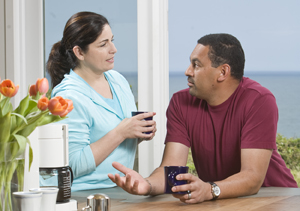

Man and woman talking over coffee at kitchen counter.

Tips for better communication

  1. As the talker, tell your partner up to 3 things you are feeling. Start your statements with "I" and keep them short. You might say something like, "I’m afraid that if we make love, I’ll get tired and have to stop."

  2. Your partner listens. They do not say anything until you are done speaking.

  3. Then your partner tells you in their own words what you said. You just listen.

  4. Now change roles. Your partner becomes the talker while you listen. Then tell your partner in your own words what you heard.

Repeat this exercise as many times as you like. Practice at least 3 times a week.


Getting help

Talk with your doctor if you and your partner are not sure about having sex again. Also ask your doctor about sexual counseling. Sexual counseling may be helpful. It can help you address many sexual concerns you and your partner may have.


© 2000-2025 The StayWell Company, LLC. All rights reserved. This information is not intended as a substitute for professional medical care. Always follow your healthcare professional's instructions.
Related Articles
Read article
Heart Health
How to Take Your Pulse

Taking your pulse is a way to measure your heart rate. When you take your pulse, you are feeling the force of blood as it's pumped from your heart into your body. Here's how to take your pulse.

Read article
Heart Health
Your Heart Risk Action Plan

Learn how to manage your risk factors for heart attack.

Read article
Heart Health
Medicines for Heart Disease

Learn about what heart medicines are commonly used and what they do.

Read article
Heart Health
What Is Event Monitoring?

Event monitoring is a painless way to record your heartbeat. The monitor is a small electrocardiogram (ECG) that you carry with you. It records your heartbeat for your provider to review at a later time.