Iritis is the inflammation of the iris, which is the colored part of the eye. It causes pain, sensitivity to light, and other problems. Iritis can lead to severe eyesight loss and even blindness.
How to say it
i-RI-tihs
How iritis affects the eye
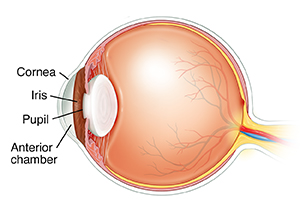
The front of the eye is covered by a clear layer called the cornea. Behind it is a fluid-filled space called the anterior chamber. Behind that is the iris. The iris is the colored part of your eye. In the center hole of the iris is the pupil. It opens and closes to control how much light enters your eye. The middle part of the eye is called the uvea. It includes the iris.
With iritis, the iris and anterior chamber are inflamed. Iritis is a type of uveitis. This is an inflammation of the uvea. Uveitis is a leading cause of blindness. Smoking increases your risk for uveitis.
What causes iritis?
Iritis can be caused by many things, such as:
-
Infection from bacteria, viruses, parasites, or fungi
-
Inflammatory autoimmune diseases like ankylosing spondylitis, lupus, sarcoidosis, or juvenile arthritis
-
Certain other health conditions such as leukemia or Kawasaki syndrome
-
Reactions to medicines
-
Eye injury
In many cases, the cause of iritis is not known.
Symptoms of iritis
You may have symptoms in one or both eyes. Symptoms range from mild to severe and can include:
-
Eye pain
-
Redness
-
Light sensitivity
-
Some loss of eyesight
-
Headache
-
Irregularly shaped pupils
You may have only a single episode of iritis. But if your iritis is caused by an inflammatory disease, you may have iritis more than once. You may also have symptoms that are more severe.
Diagnosing iritis
Your eye care doctor will ask about your past health and give you an eye exam. They may look into your eye with a slit lamp microscope. This is a device that magnifies the surface and inside of your eye. Your doctor may also put a dye on the surface of your eye. This lets them look at your cornea.
Your eye doctor may try to find the cause of your iritis. You may need tests such as:
-
Blood tests to check for infection or autoimmune diseases
-
Chest X-ray or chest CT scan to look for sarcoidosis
-
Testing of fluid from your eye to look for certain rare causes
-
X-ray of your sacroiliac joint in the pelvis to check for signs of a disease that can lead to iritis