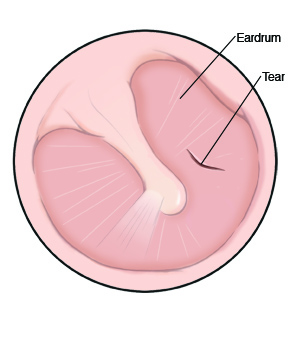
The middle ear is the space behind the eardrum. Your child has an infection of the middle ear. This can lead to pressure that causes the eardrum to tear (rupture). This may cause sudden pain. Pus or blood will drain out of the ear canal. Your child’s hearing will also likely be affected.
The infection may be treated with antibiotics. The eardrum usually heals completely on its own. If it does not, further treatment is needed. For this reason, it’s important to have a follow-up exam with your doctor.
Home care
-
Keep giving your child prescribed antibiotics until all of the medicine is gone. Do this even when they feel better after the first few days.
-
Give your child acetaminophen or ibuprofen as directed. Be safe with medicines. Read and follow all instructions on the label. Do not give aspirin to children or teens unless your child’s doctor says it is safe. Aspirin can put your child at risk for Reye syndrome, a rare but serious condition.
-
Don't smoke around your child. Smoking in the household is a major risk factor for ear infections.
-
Don’t let water get into the ear. Don’t put any medicine drops into the ear unless your child’s doctor tells you to do so.
-
Give your child plenty of fluids. Keep them home until any fever is gone.
Follow-up care
Follow up with your child’s doctor in 2 weeks, or as advised. This is to make sure the infection is getting better, and the eardrum is healing. Also follow up with your child's specialists as advised for a hearing test or exam.
When to get medical advice
Contact your child's doctor if your child has:
-
A new or increased fever.
-
Pain that gets worse or doesn’t get better.
-
Abnormal fussiness, drowsiness, or confusion.
-
A seizure.
-
A headache, neck pain, or stiff neck.
-
A new rash.
-
Frequent diarrhea or vomiting.
-
An inability to turn their head or open their mouth.