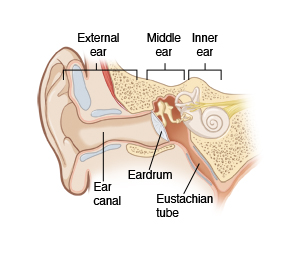
The inner ear is located behind the middle ear. It's part of the balance center of your body. When the inner ear becomes irritated, swollen, or inflamed, it causes a condition called labyrinthitis. It may be caused by an upper respiratory infection, such as a cold or flu. The cause is often not known. Labyrinthitis causes sudden dizziness and balance problems. It often causes a feeling that you or the room is spinning (vertigo). You may feel nauseated or throw up. You may also feel a loss of balance when trying to walk. Head movement from side to side or changes in body position (from lying to sitting or standing) may make symptoms worse. You may have ringing in the ear. Hearing may also be affected.
An episode of labyrinthitis may last seconds, minutes, or hours. It may never return. Or symptoms may happen again off and on for a few weeks or longer. In many cases, the problem is short-term and goes away when the inner ear problem goes away.
Home care
-
Take medicine as prescribed to ease your symptoms. Unless another medicine was prescribed, you can try over-the-counter motion sickness pills. Be careful, as these medicines may cause drowsiness.
-
If symptoms are severe, rest quietly in bed. Change positions slowly. There may be one position that feels best, such as lying on one side or lying on your back with your head slightly raised on pillows. Until you have no symptoms, you are at a higher risk of falling. Let someone help you when you get up. Get rid of home hazards, such as loose electrical cords and throw rugs. Don’t walk in unfamiliar areas that aren't lighted. Use night lights in bathrooms and kitchens. Stay away from bright lights if possible.
-
Vestibular rehabilitation exercises are done by moving your head in certain ways to help fix problems in the inner ear. If these exercises have been prescribed, do them as you have been directed.
-
Don't drive or work with dangerous machinery until 1 week has passed without symptoms or as directed by your doctor. Be careful when using stairs. Don't read when you have symptoms.
Follow-up care
Follow up with your doctor as advised.
When to contact your doctor
Contact your doctor if:
-
Your symptoms aren't controlled by medicine.
-
You have new symptoms or symptoms that get worse.
-
You have repeated vomiting that is not eased by medicine.
-
You have weakness that gets worse.
-
You faint.
-
You have a headache.
-
You have hearing loss.
-
Your symptoms last more than a few days.
Call 911
Call
-
You are abnormally drowsy.
-
You have trouble with vision or speech.
-
You have trouble moving your face, arms, or legs.
-
Your face, arms, or legs feel weak or numb.