A liver abscess is a buildup of pus in the liver. It's most often caused by a liver injury or an infection inside the abdomen. Liver abscesses are fairly uncommon. But they need to be found and checked as soon as possible, because they can cause death if they aren't treated.
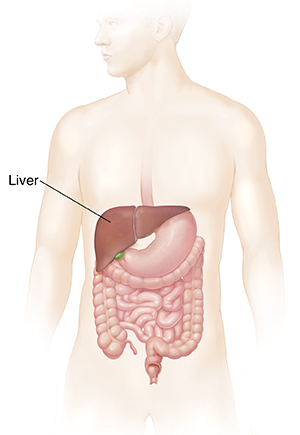
How does a liver abscess happen?
A liver abscess most often occurs because of infection from germs such as bacteria, parasites, or fungi. The type of germ determines what type of liver abscess you have.
-
Bacteria cause a pyogenic liver abscess.
-
Parasites cause an amebic liver abscess.
-
Fungi cause a fungal liver abscess.
The infection may have:
-
Spread to your liver from other structures in your belly (abdomen), such as the gallbladder, bile ducts, bowels, or appendix.
-
Traveled in your bloodstream to your liver from more distant areas of the body.
-
Happened after surgery or an injury to your liver.
Symptoms of liver abscess
Symptoms of a liver abscess may take 2 to 4 weeks to appear. They may include:
-
Fever, chills, and sweating.
-
General discomfort or a sick feeling.
-
Pain in the upper right part of the belly.
-
Weight loss.
-
Loss of appetite.
-
Nausea, vomiting, or both.
-
Diarrhea, constipation, or both.
-
A cough.
-
Chest pain or shoulder pain.
-
Yellowish eyes and skin (jaundice).
Treatment for liver abscess
Treatment depends on the type of liver abscess that you have. To find this out, your doctor may put a needle through your skin into the abscess. A sample of pus will be removed and checked. Blood tests and cultures of the blood are done to check for infection. You will also have imaging tests such as an ultrasound, an MRI, or a CT scan to evaluate your liver. In many cases, treatment starts in the hospital and continues at home. Treatment may include:
-
Taking medicines, such as antibiotics. These may be given by an I.V. (intravenous) line placed in a vein in your arm or hand. Or you may take them by mouth. You may need the medicines for a few weeks or longer.
-
Draining the pus from the abscess. The doctor may do this using a needle or tube (catheter) put through your skin. In severe cases, the doctor may make a cut (incision) through your skin to reach your liver.
-
Having imaging tests after treatment. In many cases, your doctor will order follow-up tests of your liver after treatment. This is often done by ultrasound, CT scan, or MRI.
Possible complications of liver abscess
These can include:
-
A burst (ruptured) abscess.
-
Infection spreading into other parts of the body such as the blood, belly, lungs, heart, brain, and eyes.
-
Death.
When to call your doctor
Contact your doctor right away if you have:
-
Symptoms, such as fever or pain, that don’t get better with treatment or that get worse.
-
Yellowish skin or eyes (jaundice).
-
New symptoms, such as trouble breathing.
Author: Yang, Sue
© 2000-2025 The StayWell Company, LLC. All rights reserved. This information is not intended as a substitute for professional medical care. Always follow your healthcare professional's instructions.