If you have a problem swallowing foods or liquids, you may have dysphagia. This health problem has a number of causes. Your healthcare provider can find out what is causing your problem. Treatment can help ease your symptoms.
When you swallow
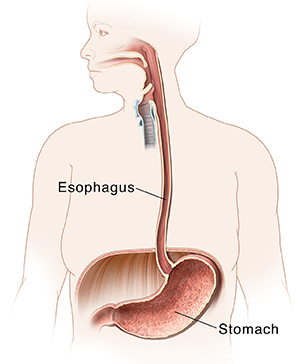
Your tongue pushes foods or liquids from your mouth to your throat as you eat or drink and swallow. They then pass down the esophagus (a muscular tube) into the stomach. The esophagus muscles tighten and relax in wavelike motions. This keeps foods or liquids moving.
Causes of dysphagia
With dysphagia, foods or liquids don't easily pass down the esophagus. Dysphagia may happen if the esophagus walls thicken. This can cause a narrowing (stricture) of the tube. Dysphagia can also be caused by:
-
Other problems in the esophagus. This may be an ulcer, irritation, infection, inflammation, or cancer.
-
A problem with the muscles in your mouth, throat, or esophagus. They don’t work as they should.
-
A problem with nerves or the brain. This could result from a stroke, cerebral palsy, multiple sclerosis, or Parkinson disease. These can leave your mouth, tongue, or throat muscles weak. Or they may change how your muscles work.
Common symptoms
If you have dysphagia, you may:
-
Feel chest pressure or pain when you swallow
-
Need extra effort or time needed to chew or swallow
-
Choke or cough when you swallow
-
Have food get stuck in your mouth when trying to swallow
-
Vomit after you eat or drink
-
Bring up food or liquid swallowed (regurgitate) out your nose
-
Breathe food or liquids into the lungs (aspirate) when you swallow
-
Have a hard time breathing after meals
-
Have fatigue and weight loss


