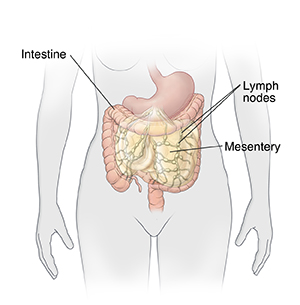
The mesentery is a sheet of tissue that attaches the intestines to the belly (abdominal) wall. Lymph nodes are small glands throughout the body. They are part of the system that fights infection . Mesenteric adenitis is swelling of the lymph nodes in the mesentery. It's also called mesenteric lymphadenitis. The problem is caused by an infection, or an inflammatory condition, often of the intestines.
Mesenteric adenitis can cause these symptoms:
-
Severe pain in the abdomen, most often in the right lower part of the abdomen although it may be felt all over in some cases
-
Nausea and vomiting
-
Diarrhea
-
Fever
-
Loss of appetite
-
Malaise (a general feeling of being unwell)
This condition can be hard to diagnose because the pain is often not just in 1 spot. You may need tests for this reason. Sometimes, the pain shifts to the lower right part of your abdomen. When this happens, it may seem like appendicitis. This is another reason for testing.
The problem most often goes away in a few days up to a few weeks. If you have a bacterial infection, you may need to take antibiotics. Medicines may also be given to help relieve pain or manage fever. If symptoms don't go away, you may need more testing. Hospitalization, IV medicines and fluid replacement may be needed in people with severe disease.
Home care
-
Your healthcare provider may prescribe medicines for pain, nausea, or infection. Follow the healthcare provider's instructions when using these medicines. If you are given medicine for infection, take all of it as directed until it's gone, even if you feel better.
-
Rest until you feel better.
-
To help relieve abdominal pain, use a heating pad or hot water bottle, or soak a towel in warm water and place it on your belly.
-
If you have had diarrhea or vomiting, follow the guidelines you are given for what to eat and drink and what to stay away from.
-
Drink plenty of fluids.
-
Don’t smoke or drink alcohol.
Follow-up care
Follow up with your healthcare provider, or as advised. It's often very hard to tell mesenteric adenitis apart from appendicitis. So close follow-up is needed.
If X-rays or other tests, such as ultrasound or CT scan were done, a radiologist will look at them. You'll be told if there are changes.
Call 911
Call
-
Trouble breathing
-
Confusion
-
Very drowsy or trouble waking up
-
Fainting or loss of consciousness
-
Fast heart rate
-
Chest pain
When to get medical advice
Call your healthcare provider right away if any of these occur:
-
Fever of 100.4°F (38°C) or higher, or as directed by your provider
-
Pain not relieved with medicine, or pain that goes away and returns
-
Pain that gets worse over time or changes location
-
Pain that localizes to the right lower belly, and doesn't get better or gets worse
-
Severe diarrhea or vomiting
-
Severe headache
-
Few or no stools or gas
-
Little or no urine
-
Leg or foot cramps
-
Small, dark red dots on the skin
-
Belly swelling
-
Bloody or black, tarry stools