Treatment
Cold Therapy (Cryotherapy) for Pain Management
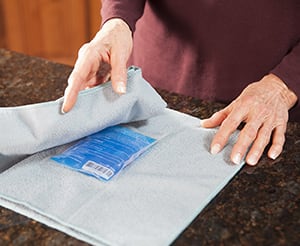
Cryotherapy literally means cold therapy. When you press a bag of frozen peas on a swollen ankle or knee, you are treating your pain with a modern (although basic) version of cryotherapy.
Cold therapy can be applied in different ways. That can include ice packs, coolant sprays, ice massage, whirlpools, and ice baths. When used to treat injuries at home, cold therapy refers to therapy with ice or gel packs that are usually kept in the freezer until needed. These are one of the simplest, time-tested remedies for managing pain and swelling.
Using cold therapy
Cold therapy is the "I" part of R.I.C.E. (rest, ice, compression, and elevation). This is a treatment recommended for the home care of many injuries. It is often a suggestion for sports injuries.
Cold therapy for pain relief may be used for:
- Runner's knee
- Tendonitis
- Sprains
- Arthritis pain
- Pain and swelling after a hip or knee replacement
- Pain or swelling under a cast or a splint
- Lower back pain
Applying ice:
- Lowers your skin temperature
- Reduces the nerve activity
- Reduces pain and swelling
Experts believe that cold therapy can reduce swelling that is tied to pain. It may also reduce sensitivity to pain. Cold therapy may be particularly effective when you are managing pain with swelling. This is especially useful around a joint or tendon.
How to apply cold therapy
While putting ice or frozen items directly on your skin can ease pain, it also can damage your skin. It's best to wrap the cold object in a thin towel. This will protect your skin from the direct cold, especially if you are using gel packs from the freezer.
Apply the ice or gel pack for about 10 to 20 minutes several times a day. Check your skin often for sensation while using cold therapy. This will help make sure you aren't damaging the tissues.
You might need to combine cold therapy with other approaches to pain management:
- Rest. Take a break from activities that can make your pain worse.
- Compression. Applying pressure to the area can help control swelling and pain. This also stabilizes the area so you won't further injure yourself.
- Elevation. Put your feet up, or elevate whatever body part is in pain.
- Pain medicine. Over-the-counter products can help ease discomfort.
- Rehabilitation exercises. Depending on where your injury is, you might want to try stretching and strengthening exercises that can support the area, as recommended by your doctor.
Stop using ice if you lose feeling on the skin where you are applying it. If cold therapy doesn't help your pain go away, contact your doctor. Also, you may want to avoid cold therapy if you have certain medical conditions, like diabetes, that affect how well you can sense tissue damage.
Author: Ignite Staff
Online Medical Reviewer: Jimmy Moe MD
Online Medical Reviewer: Raymond Turley Jr PA-C
Online Medical Reviewer: Terri Koson DNP RN ACNP
Date Last Reviewed: 09/01/2025
© 2000-2026 The StayWell Company, LLC. All rights reserved. This information is not intended as a substitute for professional medical care. Always follow your healthcare professional's instructions.

